
Designed-Based Learning
The Basics
The Doreen Nelson Method of Design-Based Learning (DBL) has been a successful teaching approach in K-12 classrooms since 1969. It’s structured around the Essential Questions found within standard curriculum content, making it relevant across all subjects, from Biology and Math to History and Art.
DBL’s strength lies in its universal applicability. Whether the goal is to integrate curriculum across grade levels or cater to specific learning needs, Design-Based Learning makes a significant positive impact in the classroom.

Increased Student Engagement:
Improved Attendance:
Fewer Discipline Problems:
Higher Academic Performance:
Learning by Doing: The Core of DBL
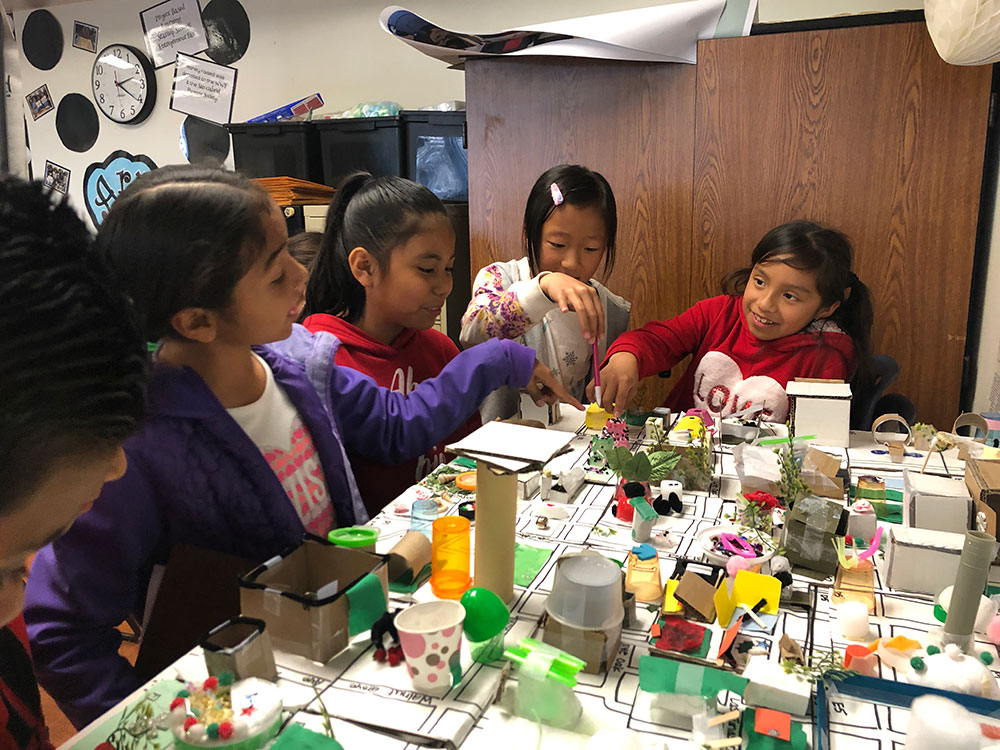
At its heart, Design-Based Learning is rooted in the spatial domain – the idea that we learn best by doing. Students engage in building physical artifacts – not just traditional art projects, but quickly made miniature models representing concepts. Think creatures, shelters, neighborhoods, or even cities.
This hands-on creation unlocks higher-level thinking skills, propelling creative thinking as students rapidly prototype and iterate. By designing solutions to content-related problems, they learn to express their ideas, become agile decision-makers, and gain the ability to apply core concepts across different subjects and situations.

DBL: Integrating into Your Classroom
It’s crucial to understand that DBL isn’t meant to replace the lessons teachers already plan. Instead, it provides a powerful methodology for presenting an integrated curriculum that effectively meets required Content and Common Core Standards.
Teachers don’t need a background in art or design to implement DBL successfully. Furthermore, it’s an incredibly affordable and sustainable approach, relying on basic materials like paper, pencils, glue, and recycled items. This means DBL programs remain effective regardless of textbook changes or budget limitations.
What Sets Design-Based Learning Apart?
DBL is a methodology, not a rigid program, curriculum, pre-scripted lesson plan, or simply arts and crafts. It’s a flexible framework for delivering required K-12 curriculum while teaching essential life and career skills. Teachers have the autonomy to decide how and when to integrate DBL challenges with Common Core Standards, and assessment is naturally embedded within the curriculum.
Teacher as Facilitator: Guides and observes, empowering student independence.
Value of Initial Ideas: No wrong answers at first; student opinions are encouraged.
Fostering Confidence: Students gain assurance by justifying their thinking and exploring solutions in a safe space.
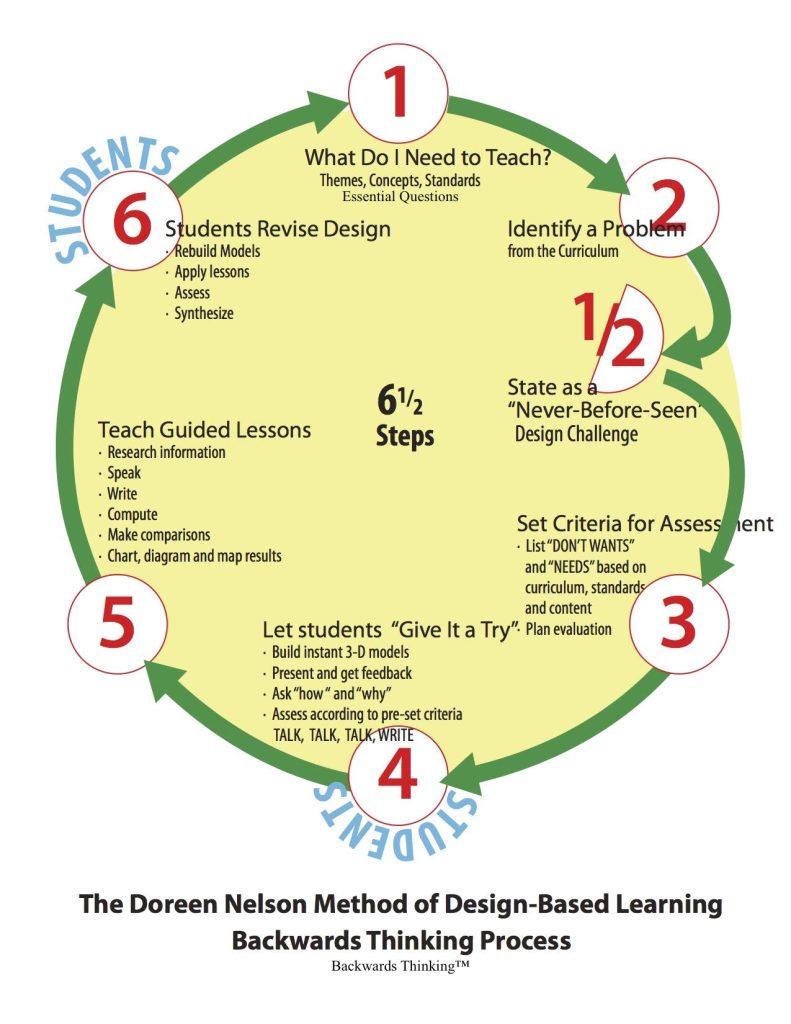
DBL's "Backwards Thinking": Engaging Higher-Level Skills First
A core element of DBL is its unique “Backwards Thinking™” approach. Unlike traditional educational methods that typically begin with foundational concepts and gradually progress to more complex ideas, DBL intentionally flips this process. Students are presented with engaging design challenges and asked to develop their own solutions before any formal textbook study or direct instruction.
The Power of the City-Building Analogy:
More than just a fun activity, building a classroom city powerfully connects hands-on creation to learning. Students link tangible structures to abstract concepts across subjects, sparking creative problem-solving as they design their City of the Future landscape.
This shared project naturally integrates subjects like language arts, social studies, and science, while discussions and research drive continuous design improvement.
Through this collaborative construction of a complex system, students develop critical thinking and problem-solving skills in a deeply engaging way.
Connects Concrete & Abstract: Tangible city parts link to academic ideas.
Sparks Creativity: Imaginative solutions for city challenges.
Integrates Subjects: Explores language arts, social studies, science.
Promotes Iteration: Learning and refining through discussion.
Cultivates Critical Thinking: Develops advanced skills collaboratively.
